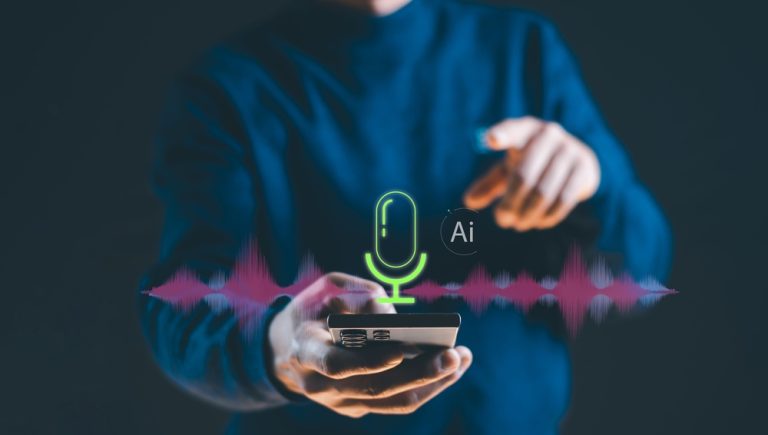
Today, events are no longer about people coming together but creating a space for different audiences. It is crucial to have your message go beyond languages, be it a virtual conference, a corporate meeting, or even a hybrid event. That’s where multilingual AI support transforms your event, making it accessible to a wider audience and increasing overall engagement.
Since inclusivity is becoming a main factor in event planning, AI-driven multilingual solutions provide a fast, scalable, and cost-effective way to break down language barriers. Let’s look at how these AI tools can take the reach of and participation in your event to the next level and why they are the future of global event management.
The Increasing Need for Inclusivity in Events
Globalization has turned the world into a tiny village, and today’s events draw in audiences of all kinds, cultures, and languages. With virtual and hybrid events, things went further. In a study by Bizzabo, 59% of event professionals agreed that virtual events are here to stay, with many adopting hybrid models catering to in-person and virtual audiences.
Furthermore, virtual events have also proven effective in expanding reach, with over 85% of event marketers organizing virtual events in the past 12 months and 57% of attendees prioritizing learning and content accessibility at these events.
Reaching a wider audience around the world naturally means heavy crossing of language barriers. This is where multilingual AI support has become a real game-changer, offering real-time, automated solutions that provide immediate access for non-native speakers without the need for human interpreters.
How Multilingual AI Support Expands Reach & Engagement
AI-driven solutions offer a scalable, cost-effective way to provide real-time translations and interpretations. Below are key reasons why multilingual AI support is essential for expanding your event’s reach and boosting engagement across borders.
1. Real-time translation for global audiences
One of the greatest reasons why multilingual AI support will be of such value is because this support will be delivered in real-time. That means AI-powered tools can instantly translate spoken words into multiple languages, making live presentations, business meetings, Q&A sessions, and discussions accessible to a worldwide audience.
For example, an online conference, joined by participants in Europe, Asia, and Latin America, can adopt AI-powered translation software to provide simultaneous translation support in Spanish, Mandarin, and French. This expands access to the event, making it more convenient and accessible for non-English speakers.
As a result, participation in the events increases, along with the number of questions posed during question-and-answer sessions, and the satisfaction of attendees improves.

2. Cost-effective and scalable solutions
Traditional interpreting services, either in-person or remote, can be quite costly-especially for large-scale or multi-day events. For example, hiring several human interpreters to provide interpretations in a number of languages can quickly add up in costs, let alone the logistical headache involved when managing such services for hybrid or virtual events.
AI support will give you a cheaper alternative; it does provide real-time translation and interpretation at a fraction of the cost. AI tools also come with robust scalability, which allows hundreds or thousands of participants to be translated simultaneously. That would make them suitable for both small workshops and big international conferences.
3. Seamless integration with event management platforms
The major benefits of AI-powered multilingual tools exist in seamless integrations with event management platforms such as Zoom, Microsoft Teams, and Webex. These tools will seamlessly integrate into your existing setup, where clicks will be all that attendees need to access any translation.
This offers a great user experience, as there is no need to download extra software or struggle through an overcomplicated system in search of translation capabilities.
This means less complexity for event organizers managing multiple systems and a professional experience for participants. For instance, platforms like InterpretCloud have plug-and-play solutions that directly embed AI-driven multilingual support into the event infrastructure, allowing real-time translation and interpretation to be set up easily.
4. More satisfaction and audience participation
Engagement starts to happen organically when event content becomes available to every participant. Audience members are more likely to ask questions, raise points, and provide their opinions if they fully understand what is being spoken about. Offering multilingual support through AI helps ensure that not even one participant has to stay behind.
For instance, a company that intends to hold a product launch event for international stakeholders can offer an AI-enabled translation of the event. This will put every stakeholder, irrespective of their mother tongue, in a position where they can easily engage in discussions and decision-making activities with ease, improving inclusivity in the event.

3 Tools and Platforms Offering Multilingual AI Support
Because of this, several tools and platforms can now offer multilingual AI solutions that enable event accessibility. These employ advanced AI algorithms to offer real-time translation and interpretation services, allowing businesses to reach a wider audience.
1. InterpretCloud
InterpretCloud is a company-wide partner for multilingual AI support of events with real-time translation and interpretation of both virtual and hybrid events. Its ability to be integrated easily into major video conferencing tools makes it easy for organizers to set up multilingual support on events quickly and efficiently.
Supporting upwards of over 100 languages, InterpretCloud will ensure that businesses can cater to diverse audiences worldwide. InterpretCloud automatically provides AI-powered speech-to-text translation for events into several languages. This makes it quite suitable for international conferences, webinars, and corporate meetings.
2. Zoom’s Multilingual AI Features
Zoom also moves in the same direction of offering multi-lingual AI support through integrations with third-party AI tools. Third-party AI integrations can allow real-time translation and transcription, making them easy for international participants to follow. This feature has made it a go-to choice for many companies that frequently hold global meetings.
3. Live Translation in Google Meet
Recently, Google Meet began offering live translation features that automatically translate spoken content into subtitles. Though still fresh, this feature has real potential to promote inclusivity during smaller virtual meetings or team collaborations. It’s especially helpful for international businesses relying on Google Workspace for communication.
Wrapping up
Today, inclusivity in events is more imperative than ever. Multilingual AI support allows companies to build a wider reach of participants, engage diverse groups of participants, and ensure fluent interactivity for all attendees. So, integrate AI-driven solutions into your event planning to amplify participation, enhance engagement, and make your event truly global.
InterpretCloud provides top-notch AI-powered solutions that are easily integrated into popular event platforms for businesses seeking dependable, scalable multilingual support. Want to take your next event to the next level? Contact us for a free quote!